


National Farmers' Federation

Environment &
Climate Change

Australian agriculture is intrinsically linked to the natural environment. Each day, farmers make decisions that influence the long-term health of our landscapes, ecosystems and natural resources, alongside the food and fibre they produce.

The environmental challenges facing Australian agriculture are becoming increasingly complex. Climate variability, more frequent extreme weather events, biodiversity decline, water security, invasive pests and weeds, and changing community expectations are reshaping the way Australian agriculture operates. At the same time, advances in science, technology and land management, together with growing opportunities in natural capital, carbon and biodiversity markets, are creating new ways for farmers to improve both environmental and business outcomes.

Australian farmers have consistently demonstrated their ability to adapt and innovate. Through improved land management, more efficient use of water and inputs, advances in genetics and technology, and the adoption of sustainable farming practices, the sector continues to reduce its environmental footprint while producing more from fewer resources. This progress reflects decades of investment, research and practical experience, and will remain critical as agriculture responds to future environmental and climate challenges.

Environmental outcomes cannot be delivered by farmers alone. Achieving lasting improvements requires policy settings that recognise the realities of farming, reward environmental stewardship, and support innovation rather than imposing unnecessary cost and complexity. Environmental regulation, climate policy and market mechanisms must be practical, evidence-based and designed to work alongside the production of food and fibre.

Policies & key issues

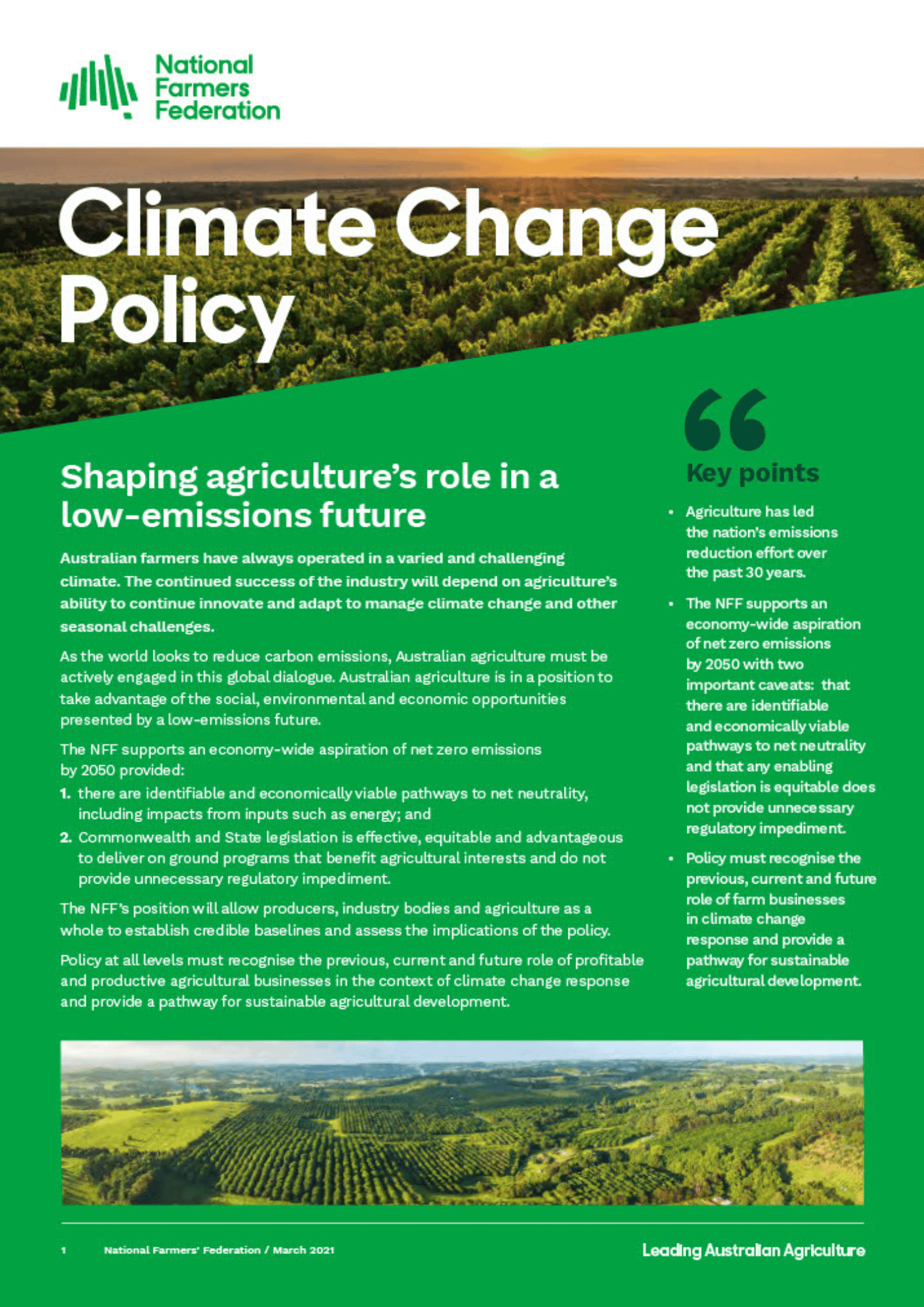
Climate change

The long-term success of Australian agriculture depends on its ability to innovate and adapt to a changing climate, while maintaining secure access to productive land and water.

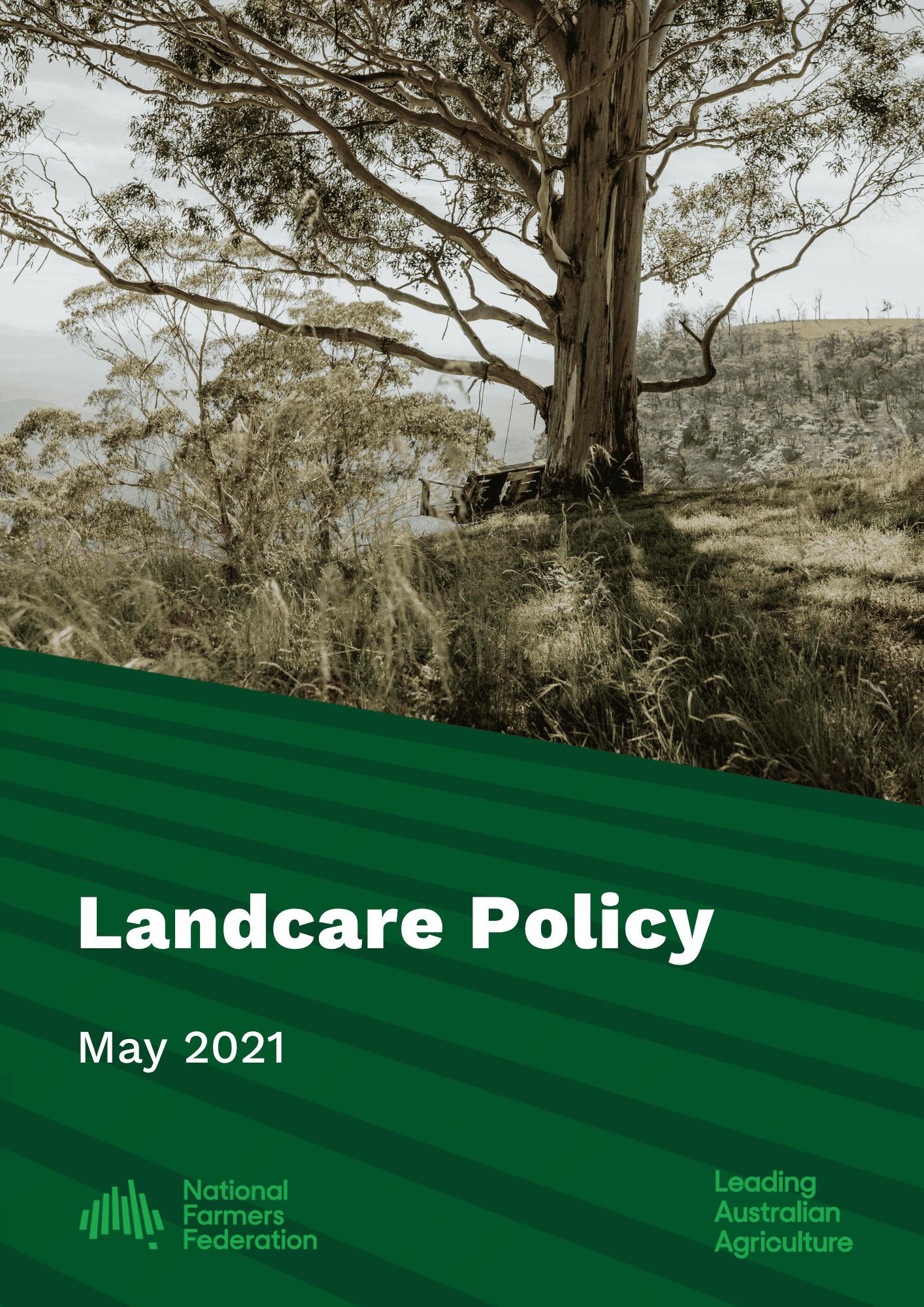
Landcare

Farmers are responsible for managing more than half of Australia’s landmass and play a critical role in protecting soil, water, biodiversity and other natural assets that underpin agricultural productivity.

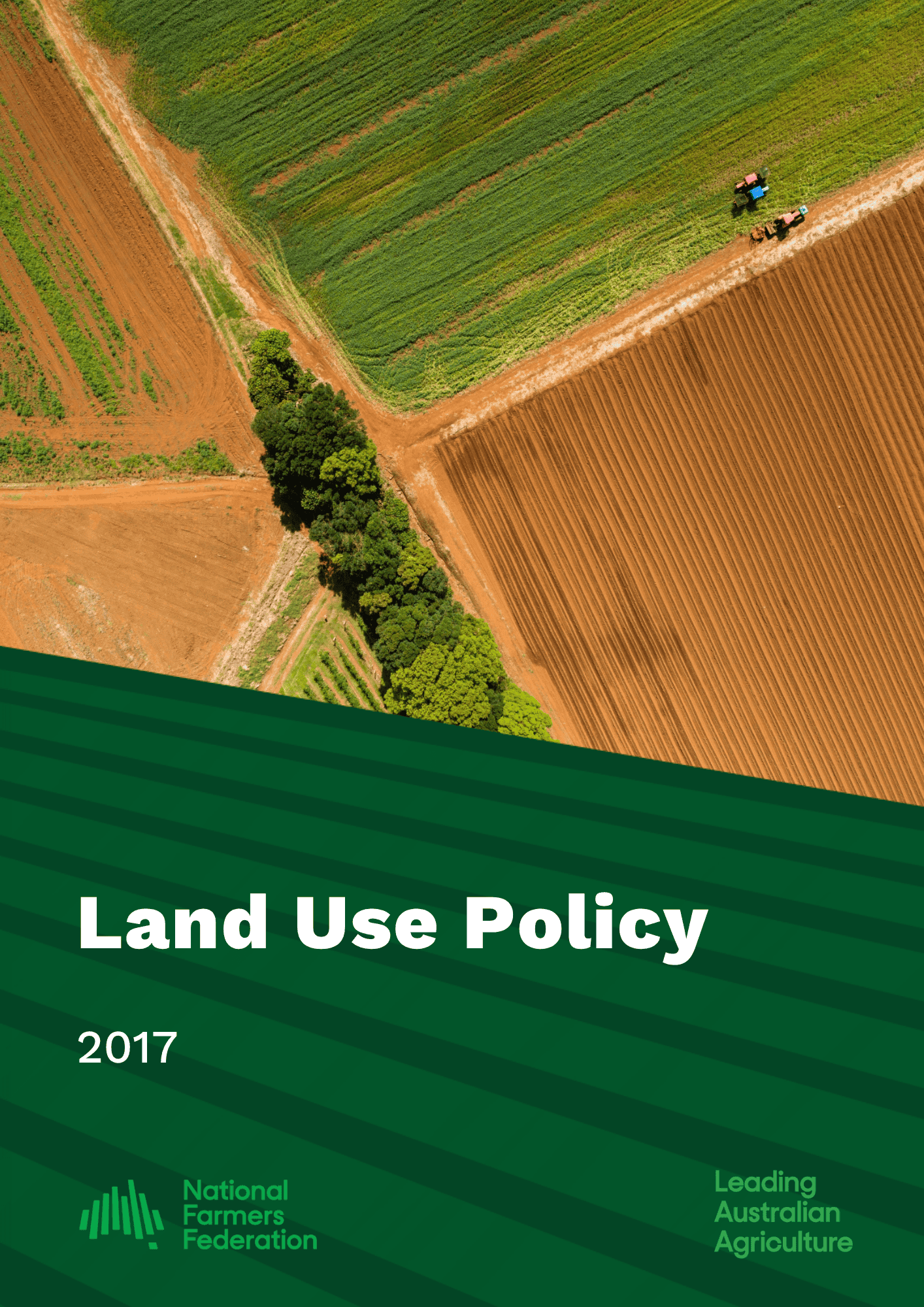
Land use

Land use decisions mustrecognise agriculture as a nationally significant industry and support the continued growth, productivity and adaptability of farm businesses.

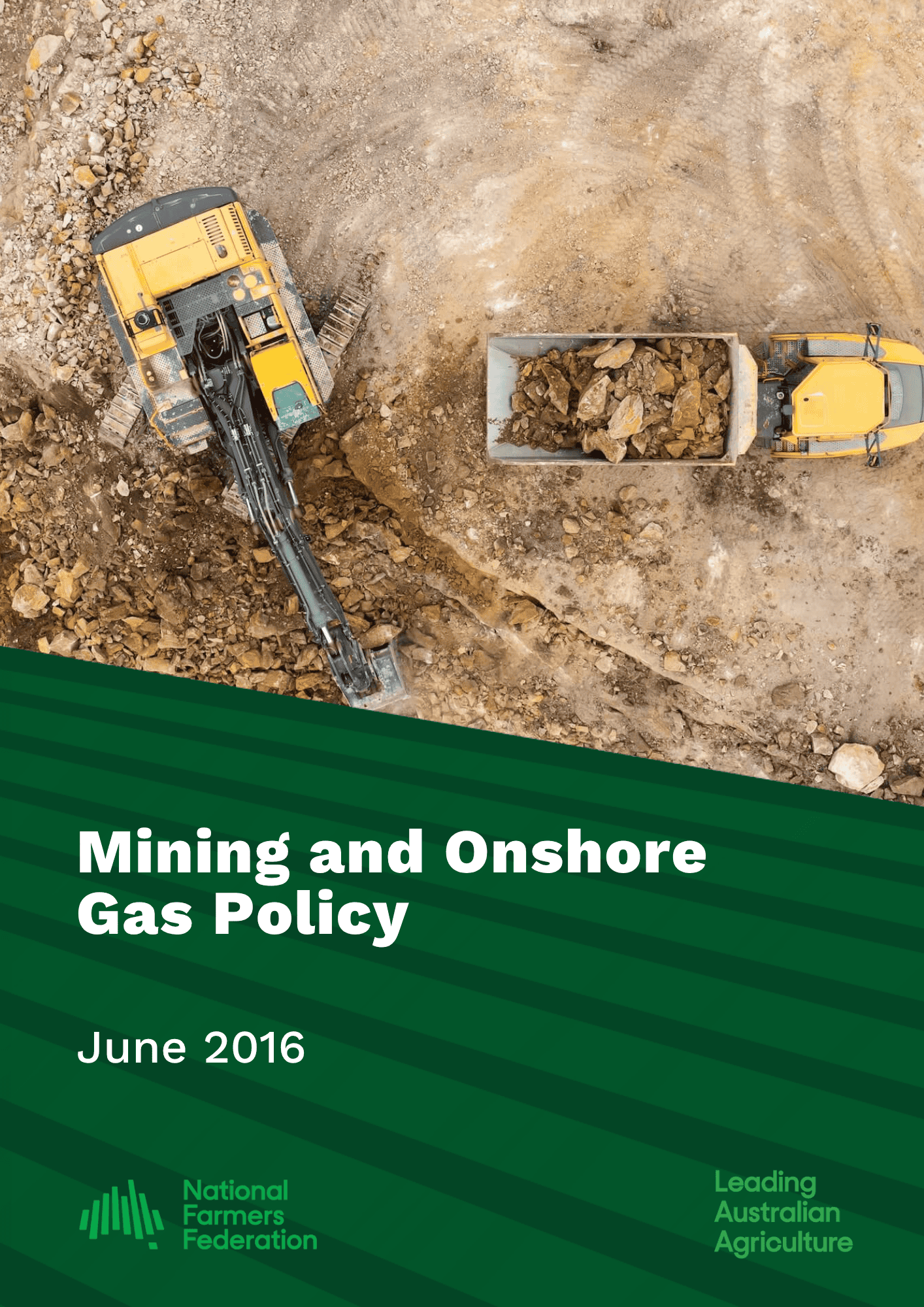
Mining & onshore gas

The NFF reaffirms its steadfast opposition to the Australian Government’s policy to phase out the live sheep trade.

Native vegetation

The NFF reaffirms its steadfast opposition to the Australian Government’s policy to phase out the live sheep trade.

Natural capital

The NFF reaffirms its steadfast opposition to the Australian Government’s policy to phase out the live sheep trade.

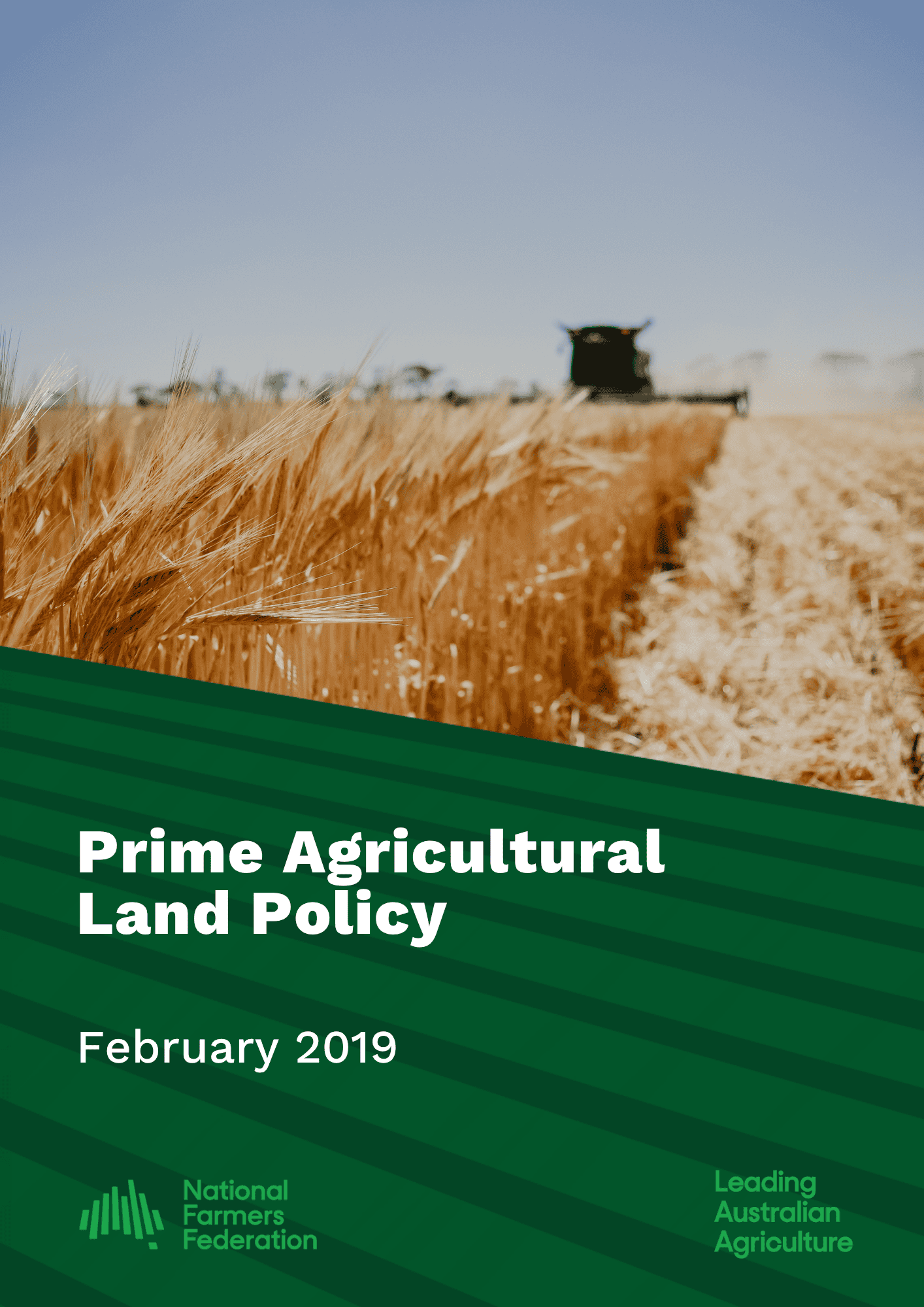
Prime land

Australian agriculture depends on access to productive land and water resources, supported by a strategy that strengthens the resilience and sustainability of farming systems.

Sustainability

The NFF reaffirms its steadfast opposition to the Australian Government’s policy to phase out the live sheep trade.

Water

The NFF reaffirms its steadfast opposition to the Australian Government’s policy to phase out the live sheep trade.

Latest news.

Farmers draw a line in the sand on EU FTA

Yesterday, a delegation representing agriculture sectors in the EU’s firing line met with the Deputy Prime Minister, Michael McCormack, and the Minister for Trade, Simon Birmingham, to voice their concerns

Read More

Join team Australian agriculture. Inquire today.