

Statement on stalled EU negotiations
Statement by NFF Chief Executive, Tony Mahar (Brussels) We support the Australian Government’s decision to continue working with the EU towards a high quality trade deal. We’re hopeful that with
Australian agriculture is intrinsically linked to the natural environment. Each day, farmers make decisions that influence the long-term health of our landscapes, ecosystems and natural resources, alongside the food and fibre they produce.
The environmental challenges facing Australian agriculture are becoming increasingly complex. Climate variability, more frequent extreme weather events, biodiversity decline, water security, invasive pests and weeds, and changing community expectations are reshaping the way Australian agriculture operates. At the same time, advances in science, technology and land management, together with growing opportunities in natural capital, carbon and biodiversity markets, are creating new ways for farmers to improve both environmental and business outcomes.
Australian farmers have consistently demonstrated their ability to adapt and innovate. Through improved land management, more efficient use of water and inputs, advances in genetics and technology, and the adoption of sustainable farming practices, the sector continues to reduce its environmental footprint while producing more from fewer resources. This progress reflects decades of investment, research and practical experience, and will remain critical as agriculture responds to future environmental and climate challenges.
Environmental outcomes cannot be delivered by farmers alone. Achieving lasting improvements requires policy settings that recognise the realities of farming, reward environmental stewardship, and support innovation rather than imposing unnecessary cost and complexity. Environmental regulation, climate policy and market mechanisms must be practical, evidence-based and designed to work alongside the production of food and fibre.
The long-term success of Australian agriculture depends on its ability to innovate and adapt to a changing climate, while maintaining secure access to productive land and water.
Farmers are responsible for managing more than half of Australia’s landmass and play a critical role in protecting soil, water, biodiversity and other natural assets that underpin agricultural productivity.
Land use decisions mustrecognise agriculture as a nationally significant industry and support the continued growth, productivity and adaptability of farm businesses.
The NFF reaffirms its steadfast opposition to the Australian Government’s policy to phase out the live sheep trade.
Australian agriculture depends on access to productive land and water resources, supported by a strategy that strengthens the resilience and sustainability of farming systems.
The NFF reaffirms its steadfast opposition to the Australian Government’s policy to phase out the live sheep trade.
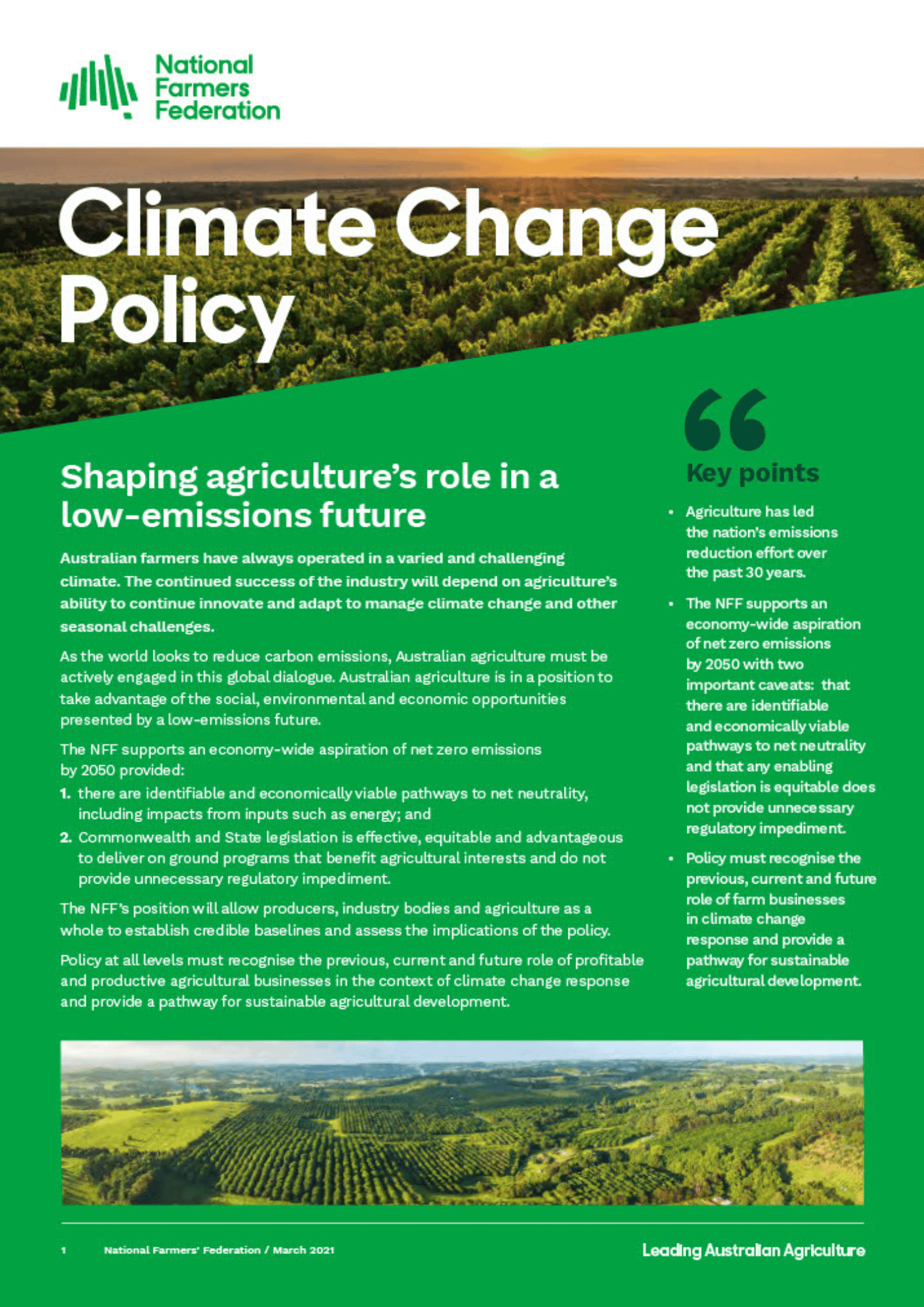
The NFF is helping shape agriculture’s role in a low-emissions future.
Climate change presents both significant challenges and opportunities for Australian farmers and will be an increasingly determinant factor in shaping the sector’s next decade. The long-term success of Australian agriculture depends on its ability to innovate and adapt to a changing climate, while maintaining secure access to productive land and water.
Australian farmers have always operated in a challenging and varied environment, and their continued prosperity relies on both effective climate action and the protection of agricultural assets. Agricultural land is a strategic national resource that governments must preserve for the future of the sector and the nation.
Australian agriculture is among the lowest emissions intensities of major agricultural exporters in the world, with emissions estimated to be upward of 42% lower than comparable peer nations. A continued transition to a low-emissions economy will require transformation across a number of complementary sectors, especially energy and transport. Policy adjustment and investment in research and development will be crucial to meet this task.
Policies that address climate change must be examined to minimise the risk of perverse outcomes and to deliver equitable outcomes for Australian farmers. Governments and industry service providers must have the tools, systems, and knowledge required to establish an industry baseline and be able to communicate this to farm businesses.
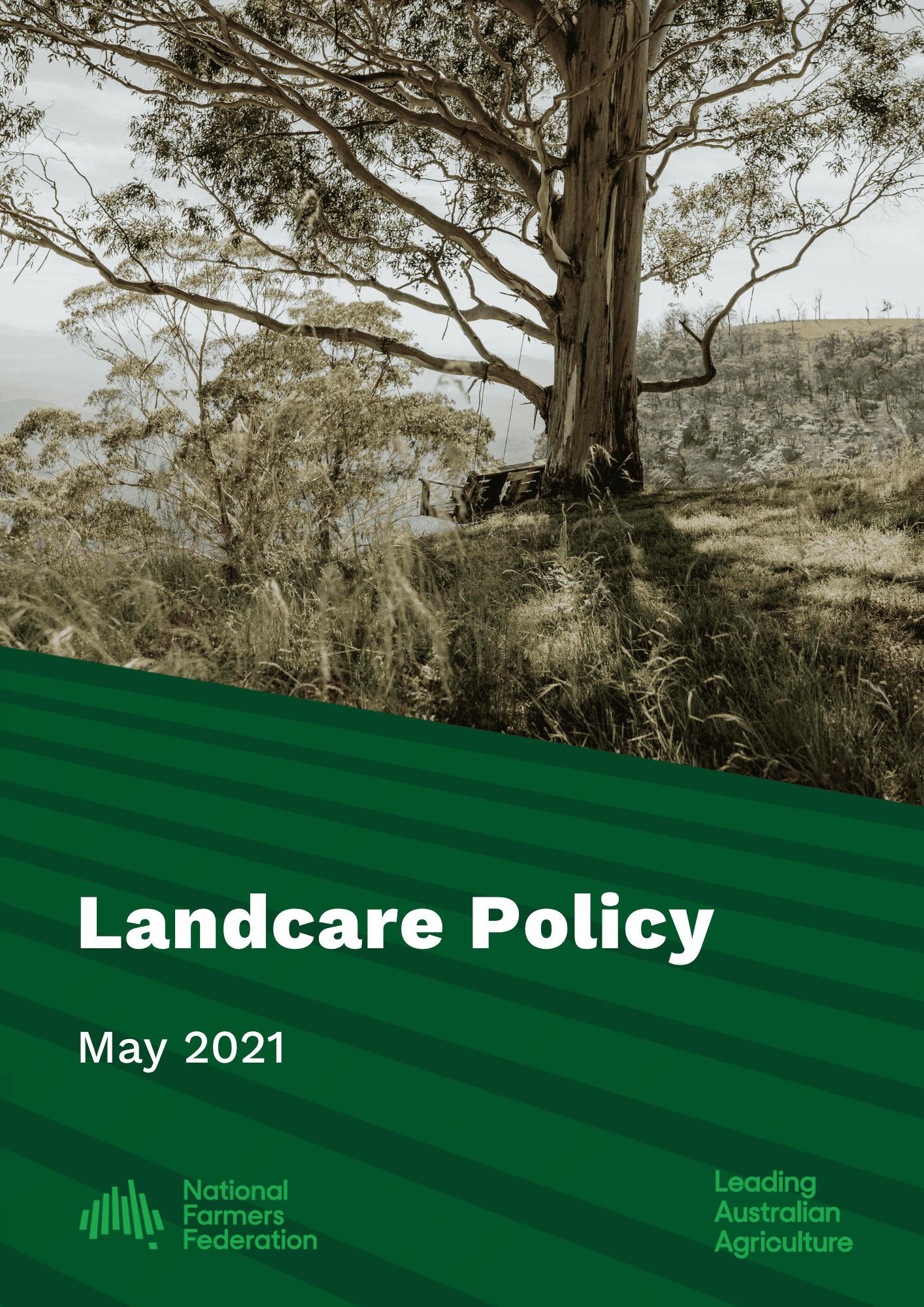
Healthy and productive landscapes are fundamental to the long-term success of Australian agriculture. Farmers are responsible for managing more than half of Australia’s landmass and play a critical role in protecting soil, water, biodiversity and other natural assets that underpin agricultural productivity. Across the country, farmers continue to invest in sustainable land management practices that improve the resilience of their businesses while delivering environmental benefits for the broader community.
Landcare continues to play an important role in supporting sustainable land management across Australia. Through partnerships between farmers, Landcare groups, regional natural resource management organisations, First Nations peoples, researchers and governments, Landcare helps deliver practical, landscape-scale environmental outcomes. Restoring native vegetation, improving soil health, protecting waterways, managing invasive species and strengthening biodiversity all contribute to more resilient farming systems and healthier natural environments.
The NFF supports practical, science-based approaches to sustainable land management that recognise farmers as partners in delivering environmental outcomes. The NFF advocates for continued investment in Landcare, policies that strengthen natural resource management, and initiatives that reward environmental stewardship while supporting productive, profitable and resilient farm businesses.
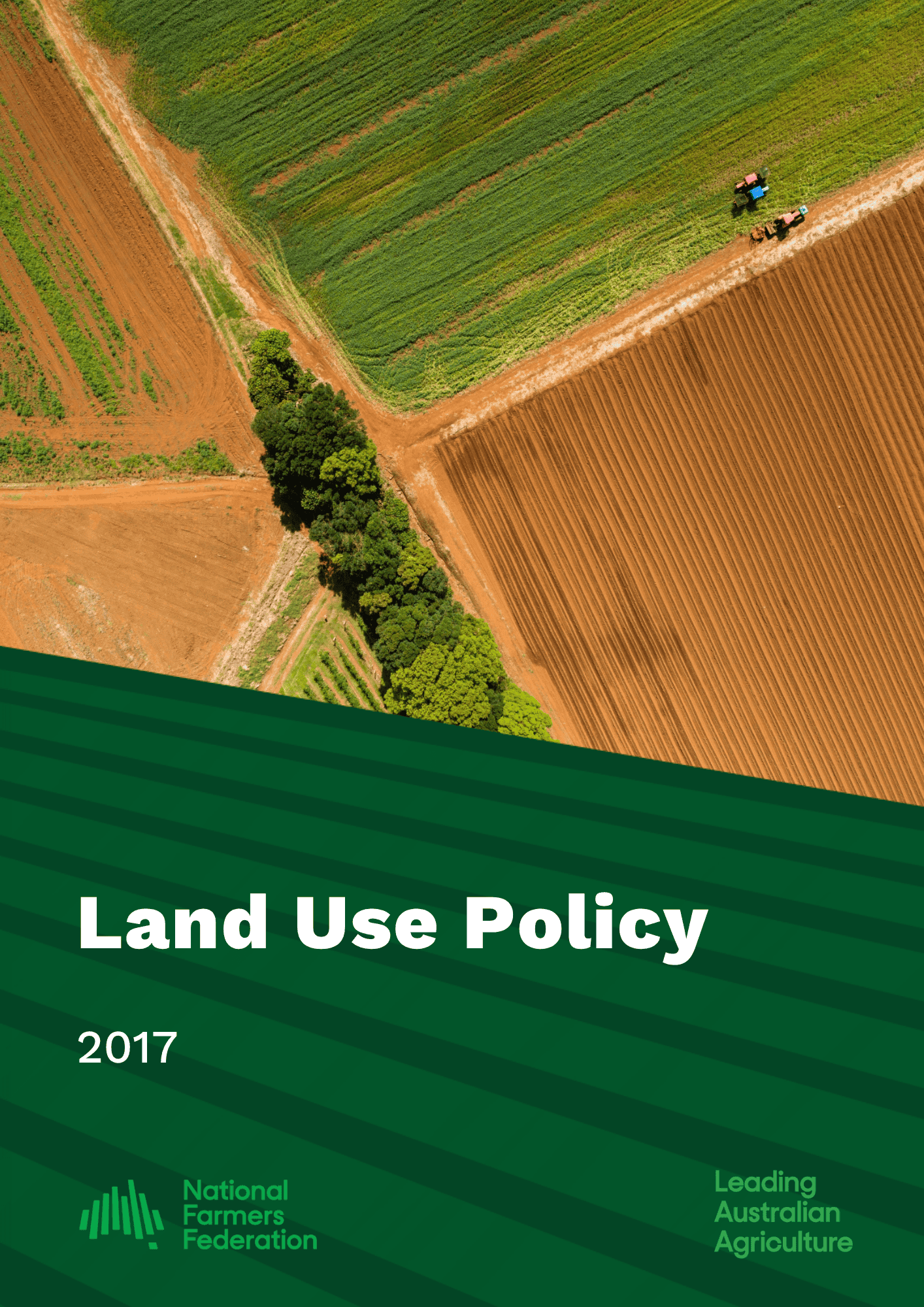
Agricultural land is one of Australia’s most valuable strategic assets. It underpins the nation’s food and fibre production, supports regional communities and contributes significantly to the Australian economy. As demand for land continues to grow from urban expansion, renewable energy, critical minerals, conservation and carbon projects, careful land use planning is essential to ensure Australia retains the productive land and water resources needed for future generations.
Land use decisions should recognise agriculture as a nationally significant industry and support the continued growth, productivity and adaptability of farm businesses. Governments must ensure planning frameworks are informed by the best available science, protect access to critical natural resources, and enable farmers to adopt modern farming practices and respond to changing markets and technologies. Decisions should also promote the coexistence of agriculture with other land uses wherever possible, while safeguarding Australia’s food security, biosecurity and long-term agricultural productivity.
The NFF advocates for strategic, evidence-based land use planning that recognises the importance of productive agricultural land and respects the rights of farmers and regional communities.
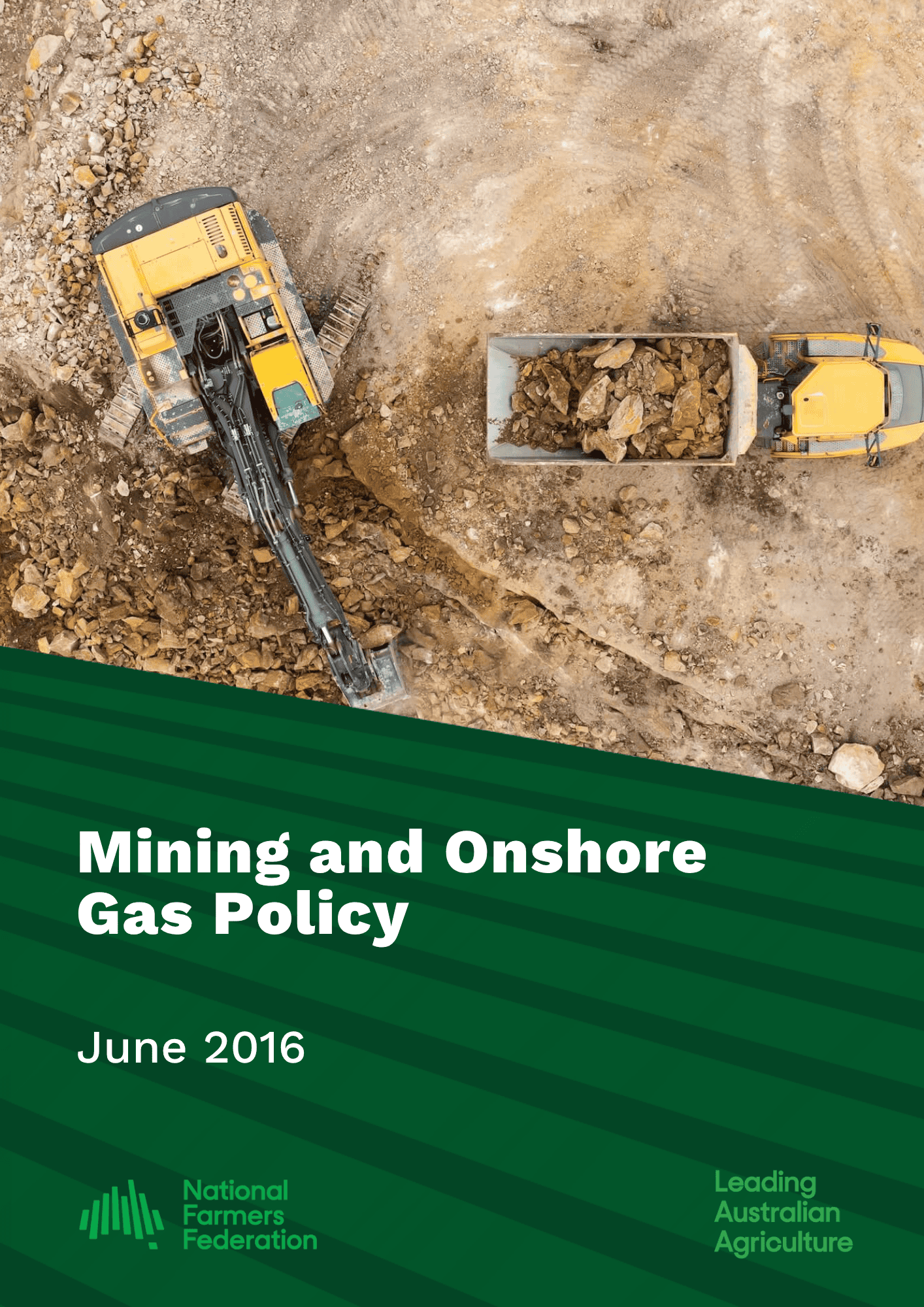
Australia’s mineral and energy resources play an important role in the national economy, but their development must be balanced with the long-term interests of agricultural producers and regional communities. Mining and onshore gas developments have the potential to affect agricultural land, water resources, biosecurity and farm operations, making robust planning, consultation and regulatory frameworks essential.
The NFF supports the responsible coexistence of agriculture with the resources sector, provided farmers’ rights, property interests and business operations are protected. The NFF advocates for transparent decision-making, meaningful engagement with landholders, fair compensation and strong safeguards for land, water and biosecurity to ensure resource developments do not compromise the long-term productivity and sustainability of Australian agriculture.
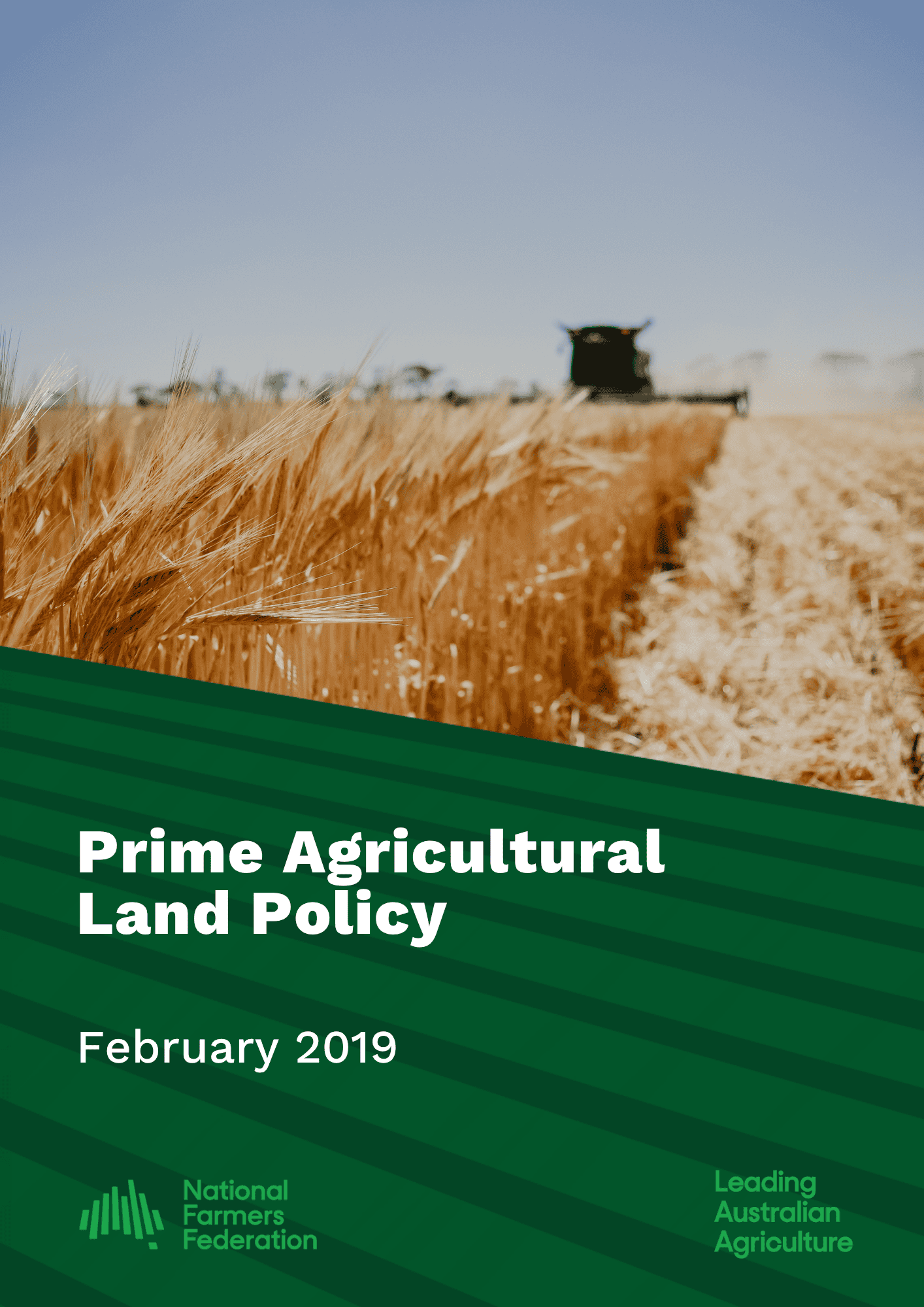
The NFF recognises the importance of prime agricultural land to Australia’s long-term food and fibre production. The future success of Australian agriculture depends on continued access to productive land and water resources, supported by a long-term strategy that strengthens the resilience and sustainability of our farming systems. Prime agricultural land is central to achieving this outcome.
Prime agricultural land is a valuable and finite resource that underpins Australia’s capacity to meet growing domestic and global demand for food and fibre, while also delivering important environmental, social and economic benefits. The NFF recognises that identifying prime agricultural land is complex. Land capability is influenced by a range of factors, including soil quality, water availability, climate, access to infrastructure, and advances in technology and innovation. It cannot be defined by cadastral boundaries alone.
A national approach to prime agricultural land should provide a strategic framework to guide land use planning and manage competing land uses, rather than impose prescriptive rules. While protecting productive agricultural land is essential, landholders must retain the flexibility to innovate and make decisions that support the long-term viability of their businesses. The NFF supports a framework that maintains and enhances the long-term productivity of agricultural land, safeguarding Australia’s capacity to produce food and fibre for generations to come.
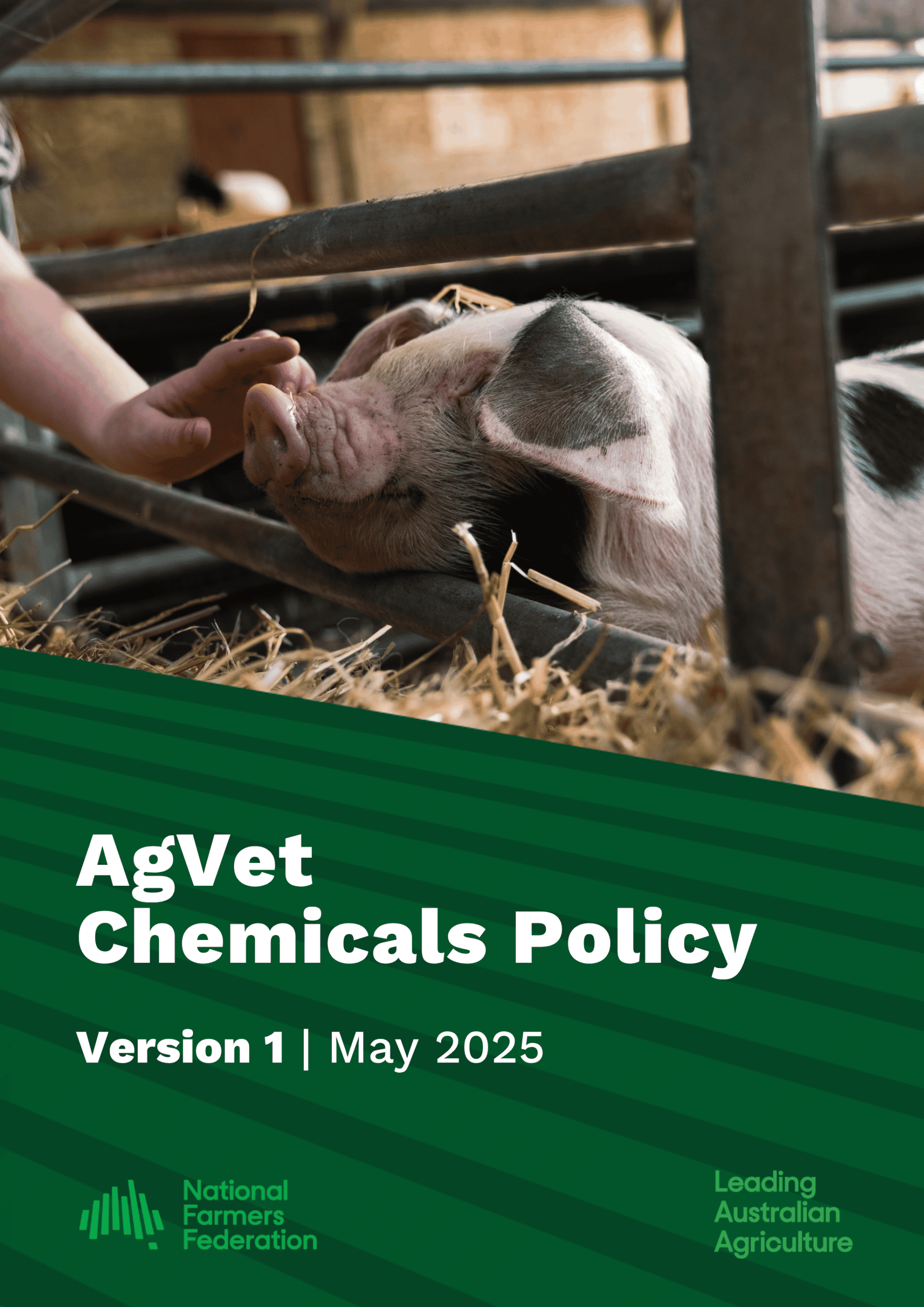
Agricultural chemicals and veterinary medicines (AgVet chemicals) are essential to producing food and fibre in Australia. Timely access to safe and effective AgVet chemicals is critical to Australian agriculture’s productivity, sustainability, competitiveness, and supports food and fibre security.
The NFF seeks an efficient, science- and risk-based regulatory environment that delivers world-leading access to technology.
Targeted reforms are needed to deliver the NFF’s vision for Australia’s regulatory environment: one that appropriately manages risk and supports agile, efficient access to AgVet chemicals to bolster productivity, manage threats to production systems, and strengthen Australia’s food and fibre security.
The NFF represents one of the largest groups of legitimate chemical users in Australia. The responsible use, monitoring and storage of farm chemicals is of paramount importance to Australia’s farmers, and must be consistently applied across state borders in line with community expectations about safety and sound environmental management.
We work with stakeholders including the Australian Government, the Australian Pesticides and Veterinary Medicines Authority (APVMA), Animal Medicines Australia and CropLife Australia to ensure Australian farmers have the technology and tools they need to protect and manage pests and diseases and increase productivity.
Agricultural chemicals and veterinary medicines (AgVet chemicals) are essential to producing food and fibre in Australia. Timely access to safe and effective AgVet chemicals is critical to Australian agriculture’s productivity, sustainability, competitiveness, and supports food and fibre security.
The NFF seeks an efficient, science- and risk-based regulatory environment that delivers world-leading access to technology.
Targeted reforms are needed to deliver the NFF’s vision for Australia’s regulatory environment: one that appropriately manages risk and supports agile, efficient access to AgVet chemicals to bolster productivity, manage threats to production systems, and strengthen Australia’s food and fibre security.
The NFF represents one of the largest groups of legitimate chemical users in Australia. The responsible use, monitoring and storage of farm chemicals is of paramount importance to Australia’s farmers, and must be consistently applied across state borders in line with community expectations about safety and sound environmental management.
We work with stakeholders including the Australian Government, the Australian Pesticides and Veterinary Medicines Authority (APVMA), Animal Medicines Australia and CropLife Australia to ensure Australian farmers have the technology and tools they need to protect and manage pests and diseases and increase productivity.
Agricultural chemicals and veterinary medicines (AgVet chemicals) are essential to producing food and fibre in Australia. Timely access to safe and effective AgVet chemicals is critical to Australian agriculture’s productivity, sustainability, competitiveness, and supports food and fibre security.
The NFF seeks an efficient, science- and risk-based regulatory environment that delivers world-leading access to technology.
Targeted reforms are needed to deliver the NFF’s vision for Australia’s regulatory environment: one that appropriately manages risk and supports agile, efficient access to AgVet chemicals to bolster productivity, manage threats to production systems, and strengthen Australia’s food and fibre security.
The NFF represents one of the largest groups of legitimate chemical users in Australia. The responsible use, monitoring and storage of farm chemicals is of paramount importance to Australia’s farmers, and must be consistently applied across state borders in line with community expectations about safety and sound environmental management.
We work with stakeholders including the Australian Government, the Australian Pesticides and Veterinary Medicines Authority (APVMA), Animal Medicines Australia and CropLife Australia to ensure Australian farmers have the technology and tools they need to protect and manage pests and diseases and increase productivity.
Statement by NFF Chief Executive, Tony Mahar (Brussels) We support the Australian Government’s decision to continue working with the EU towards a high quality trade deal. We’re hopeful that with
Paraquat and diquat are widely used in Australian agriculture, supporting the production of grains, cotton, horticulture, sugarcane, rice, wine, and variouspastures. Paraquat and diquat products, and product combinations, deliver immense
The NFF recognises the potential of genetic modification (GM) and particularly new breeding techniques (NBTs) as a valuable tool within agricultural production systems. The NFF welcomes the FSANZ proposal to

Copyright © 2026 · Created by the National Farmers' Federation